
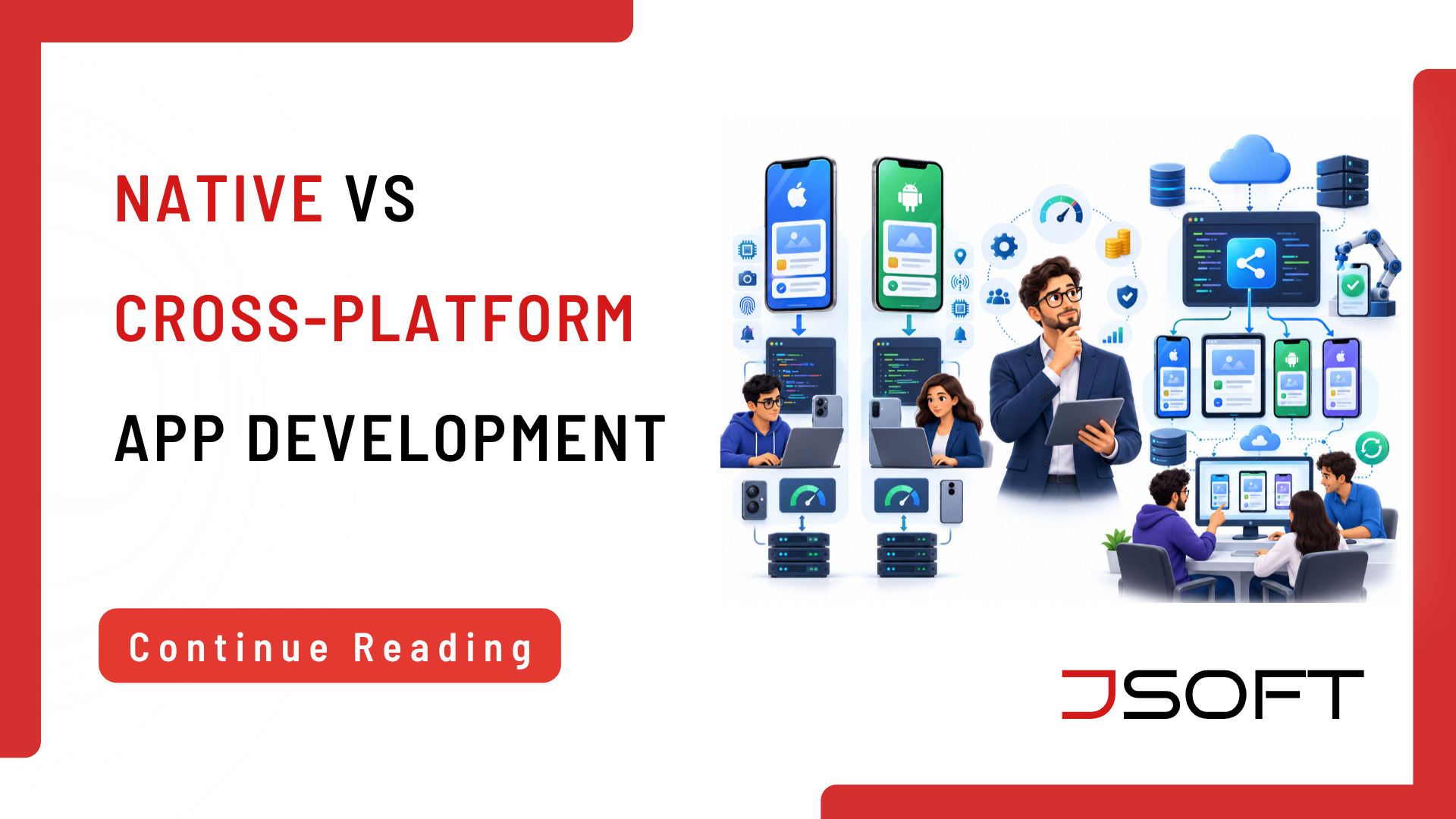
Choosing the right technology approach is one of the most important decisions when developing a mobile application. Businesses often need to decide between building separate native applications for Android and iOS or using a cross-platform approach that allows developers to reuse more code across platforms. Neither option is automatically better. The right choice depends on the application’s features, target users, performance requirements, device capabilities, integrations, development timeline, budget, and long-term maintenance needs. Understanding the difference between native and cross-platform mobile app development can help businesses make a more informed decision before development begins.
What Is Native Mobile App Development?
Native mobile app development means building an application specifically for a particular operating system using that platform’s native tools and technologies. For example, Apple’s development ecosystem uses Swift, Xcode, and SwiftUI to build applications for Apple platforms. Native Android development uses Android’s own development ecosystem and technologies.
The basic idea is:
One platform → Platform-specific development
This allows developers to work closely with the capabilities and design patterns of the target platform.
What Is Cross-Platform Mobile App Development?
Cross-platform development allows developers to build applications for multiple platforms using a shared codebase or development approach.
Frameworks such as Flutter are designed specifically for multi-platform development. Flutter states that developers can build, test, and deploy applications across multiple platforms from a single codebase.
This means a business can potentially create a common application foundation for Android and iOS instead of maintaining completely separate implementations.
When Is Native App Development the Better Choice?
Native development can be appropriate when:
- The application depends heavily on platform-specific capabilities
- Advanced device functionality is required
- Performance is highly critical
- Specialized hardware features are required
- The application needs deep platform integration
- A highly platform-specific user experience is important
Examples may include applications with advanced device functionality, specialized enterprise hardware, complex graphics, or other platform-specific requirements.
When Is Cross-Platform Development the Better Choice?
Cross-platform development can be attractive when:
- Both Android and iOS are required
- The application has largely shared functionality
- Development efficiency is important
- A business wants to launch on multiple platforms
- The product needs a common feature set
- The business wants a shared development foundation
Flutter, for example, supports applications across mobile, web, desktop, and other platforms through a shared development approach.
What About Mobile App Development Cost?
Cost is one of the most common reasons businesses compare native and cross-platform development.
However, technology choice is only one factor.
The total cost can depend on:
- Number of screens
- UI/UX complexity
- Backend development
- APIs
- User authentication
- Payment integration
- Push notifications
- GPS and location features
- Third-party integrations
- Testing
- Security
- Maintenance
- App store requirements
Cross-platform development can reduce duplicated development effort for suitable projects. However, it should not automatically be assumed to be cheaper. Choosing a technically unsuitable approach can create additional development or maintenance work later.
How to Choose the Right Approach for Your Business
Before selecting native or cross-platform development, businesses should evaluate the following:
- Target Platforms – Does the application need to support Android, iOS, or both?
- Device Features – Does the application require GPS, Bluetooth, camera, sensors, biometrics, or other specialized capabilities?
- Performance Requirements – Does the application involve intensive graphics, real-time processing, or other demanding operations?
- User Experience – Does the product need to closely follow platform-specific design conventions?
- Development Timeline – How quickly does the business need to launch the application?
- Budget – What development and long-term maintenance resources are available?
- Backend and API Requirements – How will the mobile application communicate with existing business systems?
- Long-Term Maintenance – Who will maintain the application, fix issues, update dependencies, and support future operating-system changes?
Why Application Architecture Matters
Whether a business chooses native or cross-platform development, good architecture is essential.
A reliable mobile application may require:
- Secure APIs
- Backend services
- Authentication
- Data management
- Error handling
- Testing
- Monitoring
- Analytics
- Security controls
- Maintainable code
Choosing the framework is only one part of the development decision.
How JSOFT Approaches Mobile App Development
A mobile application should be designed around the business problem it needs to solve.
JSOFT can help businesses evaluate application requirements, user needs, features, platforms, integrations, and long-term objectives before selecting an appropriate development approach.
Instead of choosing native or cross-platform development simply because one technology is popular, businesses should first determine what the application needs to achieve.
This helps align the technology choice with the actual business requirement.
Frequently Asked Questions
What is native mobile app development?
Native development builds an application specifically for an operating system using that platform’s native tools and technologies.
What is cross-platform mobile app development?
Cross-platform development uses a shared codebase or development approach to build applications for multiple platforms.
Is cross-platform development cheaper?
It can reduce duplicated development effort for suitable projects, but the total cost depends on features, integrations, backend requirements, testing, maintenance, and technical complexity.
Which is better, native or cross-platform?
Neither is universally better. The right choice depends on platform requirements, performance, device features, user experience, budget, timeline, and maintenance needs.
Can cross-platform apps access native device features?
Yes. Modern cross-platform frameworks can access many platform services and integrate platform-specific functionality when necessary.
Should a business choose the technology before defining the app requirements?
No. The application’s requirements should be understood first so the development approach can be selected based on the actual business and technical needs.