field staff tracking software sri lanka
May 20, 2026

If you manage a field team in Sri Lanka, you already know the frustration. You send staff out in the morning and have no real visibility into where they are, whether they arrived on time, or how productive their day has actually been. Manual attendance sheets get lost or manipulated. Phone calls waste time on both sides. And at the end of the day, you receive reports that tell you very little about what really happened out in the field.

These are not minor inconveniences. Fake attendance, inefficient routes, and poor accountability cost businesses real money every single day. This is exactly the problem that field staff tracking software Sri Lanka businesses are now solving with JMAP software – a purpose-built employee tracking system Sri Lanka field teams can use directly from their existing mobile phones, with no hardware required and no complex setup.

Challenges in Managing Field Staff

Lack of real-time visibility is the most common pain point reported by businesses managing field teams. When your sales representatives, delivery drivers, or service technicians are spread across the city, knowing their exact location and work status in real time is nearly impossible without a dedicated field employee monitoring system. Managers end up relying on self-reported updates that are difficult to verify and easy to manipulate.

Manual attendance tracking creates serious downstream problems. Paper sign-in sheets can be filled in hours late or filled in by a colleague on behalf of someone who has not arrived. Without a reliable attendance tracking app, businesses in Sri Lanka routinely pay for hours that were never actually worked, with no clear audit trail to investigate.

Poor accountability follows naturally from both. When field staff know there is no systematic oversight in place, productivity drops, routes get stretched beyond necessity, and client visits get skipped entirely. A robust employee tracking system that Sri Lankan businesses deploy consistently sends a clear message to the workforce: performance is measured, recorded, and reviewed.

What is Field Staff Tracking Software?

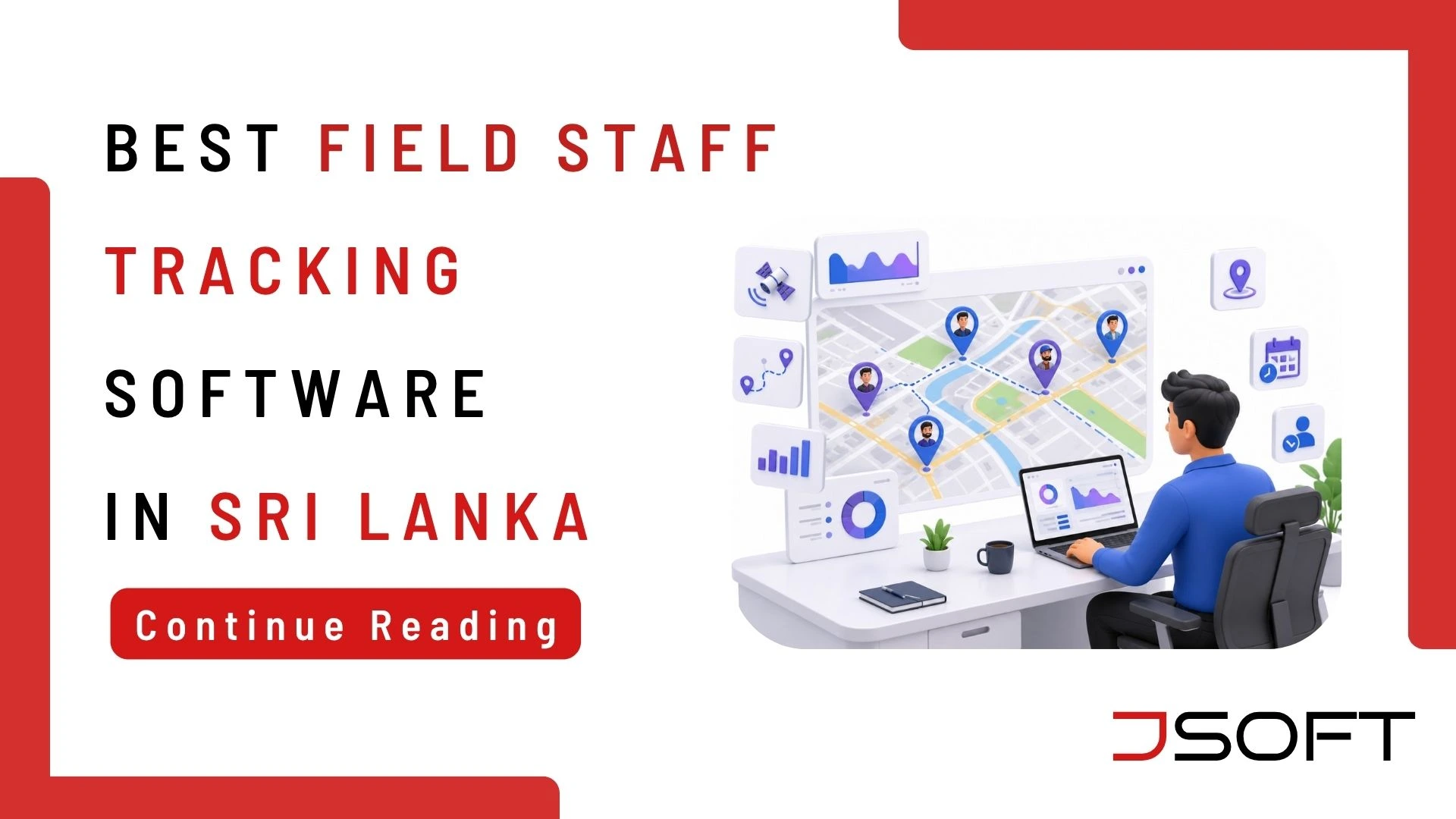
Field staff tracking software is a digital workforce management software solution that enables businesses to monitor, manage, and communicate with remote and mobile employees in real time. It typically brings together GPS location tracking, digital attendance, route monitoring, task assignment, visit logging, and automated reporting into a single platform accessible from a smartphone.

Businesses across Sri Lanka use field staff tracking software to replace manual systems for roles including sales representatives, security guards, delivery drivers, maintenance technicians, and any position that operates away from a fixed office. The best systems – including JMAP software – are designed to run on standard Android smartphones, requiring no additional hardware investment and no complex technical setup for staff in the field.

Key Features of JMAP Software

  • Real-time location tracking: Live GPS tracking of every field staff member from a central manager dashboard. Know exactly where every team member is at any given moment – without making a single phone call.
  • Attendance and check-ins: The attendance tracking app functionality in JMAP allows staff to clock in and out with GPS-verified location stamps, eliminating fake attendance and ensuring that records are always accurate and time-stamped.
  • Route tracking: JMAP software records the complete travel route of each field employee throughout the working day, giving managers clear visibility into time spent in transit versus time spent productively on site.
  • Visit logs and reports: Every client or location visit is automatically logged with timestamps, GPS coordinates, and staff notes. End-of-day activity reports are generated automatically – no manual writeups, no delays, no missing information.
  • Manager dashboard: A central, real-time view of all field staff, their current locations, completed visits, and daily activity – accessible from any device with an internet connection, from anywhere.

Benefits of Using JMAP for Businesses

Increased productivity is the most immediate benefit businesses report after deploying a field staff tracking software solution in Sri Lanka. When staff know their routes, check-ins, and visit logs are tracked in real time, time-wasting behaviour drops measurably. GPS-tracked field teams consistently complete more verified visits per working day than untracked counterparts operating under the same conditions.

Better monitoring allows managers to shift from reactive firefighting to proactive workforce management software oversight. Instead of calling individual staff members to find out where they are, managers see the full operational picture on a single dashboard and can intervene only where and when it is genuinely necessary.

Reduced operational costs result directly from eliminating time theft, optimising travel routes to reduce fuel consumption, and verifying overtime claims against actual GPS data before approving payment. For businesses managing 10 or more field staff, the cost savings from deploying an employee tracking system in Sri Lanka typically exceed the software investment within the first month of consistent use.

Industries That Benefit from JMAP Field Staff Tracking Software

IndustryHow JMAP Helps
Security CompaniesGuard checkpoint logging, shift attendance tracking
Delivery & LogisticsRoute optimisation, proof of delivery, driver real-time location monitoring
Sales TeamsClient visit logs, daily call reports, territory coverage tracking
Service ProvidersTechnician dispatch, job completion records, time-on-site logs

Across all of these industries, the core value of JMAP software as a field employee monitoring system is consistent: replacing guesswork and manual reporting with accurate, real-time data about where your workforce is deployed and what it is actually delivering.

How JMAP Improves Daily Operations

Transparent workforce: When every field employee knows that their location, attendance, and visit activity is being tracked objectively by the field employee monitoring system, behaviour shifts – without requiring constant micromanagement from supervisors. Unofficial extended breaks, unauthorised route diversions, and inaccurate visit reporting all reduce when staff understand that the system provides a clear, automatic record of the working day.

Better planning: With historical route data and visit logs from the attendance tracking app, managers can identify patterns over time – which areas consistently take longer to cover, which routes are inefficient, and which client accounts require more allocated time. Workforce management software scheduling decisions become evidence-based rather than assumption-based.

Data-driven decisions: JMAP software generates automated daily and weekly reports, giving management a clear, factual view of field team productivity over time. Rather than relying on anecdotal updates and verbal briefings, businesses can track KPIs such as visits completed per day, average time on site, attendance compliance rates, and route coverage – and use that data to make better, faster operational decisions.

How to Choose the Right Tracking Software

Ease of use: Field staff should be able to operate the employee tracking system Sri Lanka on their own existing smartphones without technical training or IT assistance. If the app is difficult to set up or frequently requires troubleshooting, adoption will fail regardless of the features it offers.

Mobile compatibility: The best field staff tracking software Sri Lanka solutions run on standard Android devices – no dedicated GPS hardware, no additional cost to equip each team member with specialist equipment.

Reporting features: Look for automated daily reports, visit logs, attendance summaries, and route histories. A workforce management software solution that still requires manual data export or spreadsheet compilation defeats the core purpose of deploying an automated system.

Local support: For businesses operating in Sri Lanka, having a support team that understands local business conditions and is reachable during Sri Lankan working hours matters. JMAP software is built and supported by JSOFT’s local team, with no offshore support delays.

Scalability: Whether you manage 5 field staff or 500, the field employee monitoring system should scale to your needs without requiring a platform migration or a separate enterprise-tier agreement.

Final Thoughts on Field Staff Tracking Software

Managing a field team without a field staff tracking software solution in Sri Lanka in 2026 is increasingly difficult to justify. The tools are accessible, the setup is straightforward, and the operational benefits – better visibility, reduced time theft, stronger accountability, and data-driven planning – are well documented across every industry that has made the transition.

JMAP software gives Sri Lankan businesses of all sizes a practical, mobile-first employee tracking system that Sri Lankan field teams can adopt quickly. With local support, no hardware requirements, and automated reports that make daily workforce management genuinely easier, JMAP is built for businesses that run on the work of people in the field.

Read also: Why Digitalising Your Small Business Is a Game-Changer and What Is the ROI of Digitalisation for Sri Lankan SMEs?.

Take Control of Your Field Team with Smart Tracking

Start using JMAP today for better workforce management – real-time GPS tracking, digital attendance, route monitoring, and automated daily reports in one app.

Call: 077 630 6303 | Email: info@jsoft.lk

Visit: jsoft.lk

Frequently Asked Questions

Q: What is field staff tracking software?

A: Field staff tracking software is a digital tool that allows businesses to monitor the real-time location, attendance, and work activity of employees who operate outside a fixed office environment. It uses GPS technology and a mobile app to record check-ins, travel routes, visit logs, and productivity data – replacing manual reporting systems with accurate, automated records accessible to managers from a central dashboard.

Q: How does an employee tracking system improve productivity?

A: When field staff know their movements and activities are recorded in real time by a field employee monitoring system, time-wasting behaviour decreases and accountability increases. Managers can identify route inefficiencies, verify client visits against GPS records, and make staffing decisions based on actual performance data rather than self-reported updates. Most businesses see measurable productivity improvements within the first few weeks of deploying an employee tracking system in Sri Lanka.

Q: Is JMAP suitable for small businesses?

A: Yes. JMAP software is specifically designed to be affordable and straightforward to deploy for small and medium businesses in Sri Lanka. No dedicated hardware is required – field staff use their existing Android smartphones. Whether you manage 3 field employees or 300, JMAP scales to your operational needs. Contact JSOFT for current pricing and setup information.

Q: Can tracking software work on mobile phones?

A: Yes. JMAP software is a mobile-first field staff tracking software Sri Lanka solution designed to run on standard Android smartphones. Field staff download the app, log in with their credentials, and their location and activity are tracked automatically throughout the working day. No dedicated GPS devices, specialist hardware, or technical setup is required on the staff side – just an Android smartphone and an active internet connection

Q: Is employee tracking legal in Sri Lanka?

A: Employee tracking for work purposes is legally permissible in Sri Lanka when staff are clearly informed that a tracking system is in use as a condition of their employment. Employers should disclose the use of a field employee monitoring system in employment contracts or staff policy documentation. Tracking is appropriate only during working hours and for work-related activities – not during personal time. JSOFT recommends consulting your HR advisor or legal counsel when deploying any workforce management software solution to ensure your policies are properly documented.

How to Choose a Mobile App Developer in Sri Lanka-JSOFT
May 8, 2026

Your mobile app represents your business to everyone who downloads it. Choosing the right developer is crucial. Sri Lanka’s app development market has expanded quickly, and the choices are plentiful. However, not every developer provides the same level of quality, communication, or reliability. Whether you are creating a customer-facing app, an internal tool, or a service platform, these seven questions will help you find the right partner before signing any contracts.

1. Can You Show Me Apps You Have Already Built?

A portfolio reveals a developer’s capabilities. Ask to see live apps on the Google Play Store or Apple App Store, not just screenshots. Download and use them yourself. Look at the ratings and reviews from real users. Does the design seem polished? Is the navigation easy to use? Does the app run smoothly without crashing? A trustworthy developer should have at least two or three finished projects they are proud to show you.

2. Do You Build for iOS, Android, or Both?

Some developers focus on one platform. Others use cross-platform tools like Flutter or React Native, which let a single codebase work on both iOS and Android. If your audience uses both platforms as most business audiences in Sri Lanka do, you need a developer who can manage both effectively. Ask which method they recommend for your specific needs and why.

3. What Is Your Development Process?

Good developers follow a clear process that includes gathering requirements, designing UI/UX, running development sprints, testing, and launching. Ask how they handle communication throughout the project. How often will you receive updates? How are change requests processed? Will you see a working prototype before full development starts? A developer who cannot explain their process clearly may run into cost overruns later.

4. Who Owns the Code After the Project Is Complete?

Many first-time app clients forget this question and later regret it. Some developers keep ownership of the source code or charge ongoing fees to access your own product. You should fully own the source code after final payment, without relying on the developer to make changes or migrate it. This ownership must be confirmed in writing within the contract before any work begins.

5. How Do You Test the App Before Launch?

An app that crashes on certain devices, struggles under heavy use, or generates errors can harm your brand shortly after launch. Ask how the developer conducts quality assurance whether on real devices or just emulators, and if their testing involves manual or automated methods. What is their process for logging and fixing bugs before delivery? A reliable developer treats QA as a crucial phase of the project, not just something done at the end.

6. What Support Do You Offer After Go-Live?

Launching an app is not the end of the story. Operating system updates can disrupt features. Users may find bugs that testing overlooked. Features may need to change as your business grows. Ask if post-launch maintenance is included or if it costs extra, how quickly they respond to urgent issues, and whether they are available for future updates. A developer who vanishes after delivery can create long-term problems.

7. Can You Integrate with My Existing Systems?

Most business apps need to link to existing tools, a payment gateway, a POS system, a CRM, or a third-party API. Ask if the developer has experience with the specific integrations your app needs, and request examples of similar work they have completed. Integration issues are a common cause of cost overruns and project delays. Clearing this up ahead of time saves your timeline and budget.

Quick Checklist Before You Sign
• Reviewed at least 2 live apps in the app store
• Confirmed platform coverage – iOS, Android, or both
• Understood the development and communication process
• Confirmed full source code ownership on final payment
• Verified QA and testing methodology
• Confirmed post-launch support terms in the contract
• Confirmed required integrations are supported with examples

Frequently Asked Questions

Q: How much does it cost to build a mobile app in Sri Lanka?
A: App development costs in Sri Lanka vary widely based on complexity, platforms, and features. A basic single-platform app may start at Rs. 150,000, while a fully featured iOS and Android app with backend integration could be significantly more. The best approach is to reach out to a developer with your requirements and ask for a detailed estimate. JSOFT provides tailored quotes based on your specific goals.
Q: How long does it take to build a mobile app?
A: A simple app typically takes 6 to 12 weeks from requirements to launch. A more complex app with multiple integrations or custom backend systems, or both iOS and Android versions, may take 3 to 6 months. The timeline heavily depends on how quickly requirements are finalized and how promptly feedback is given at each stage.
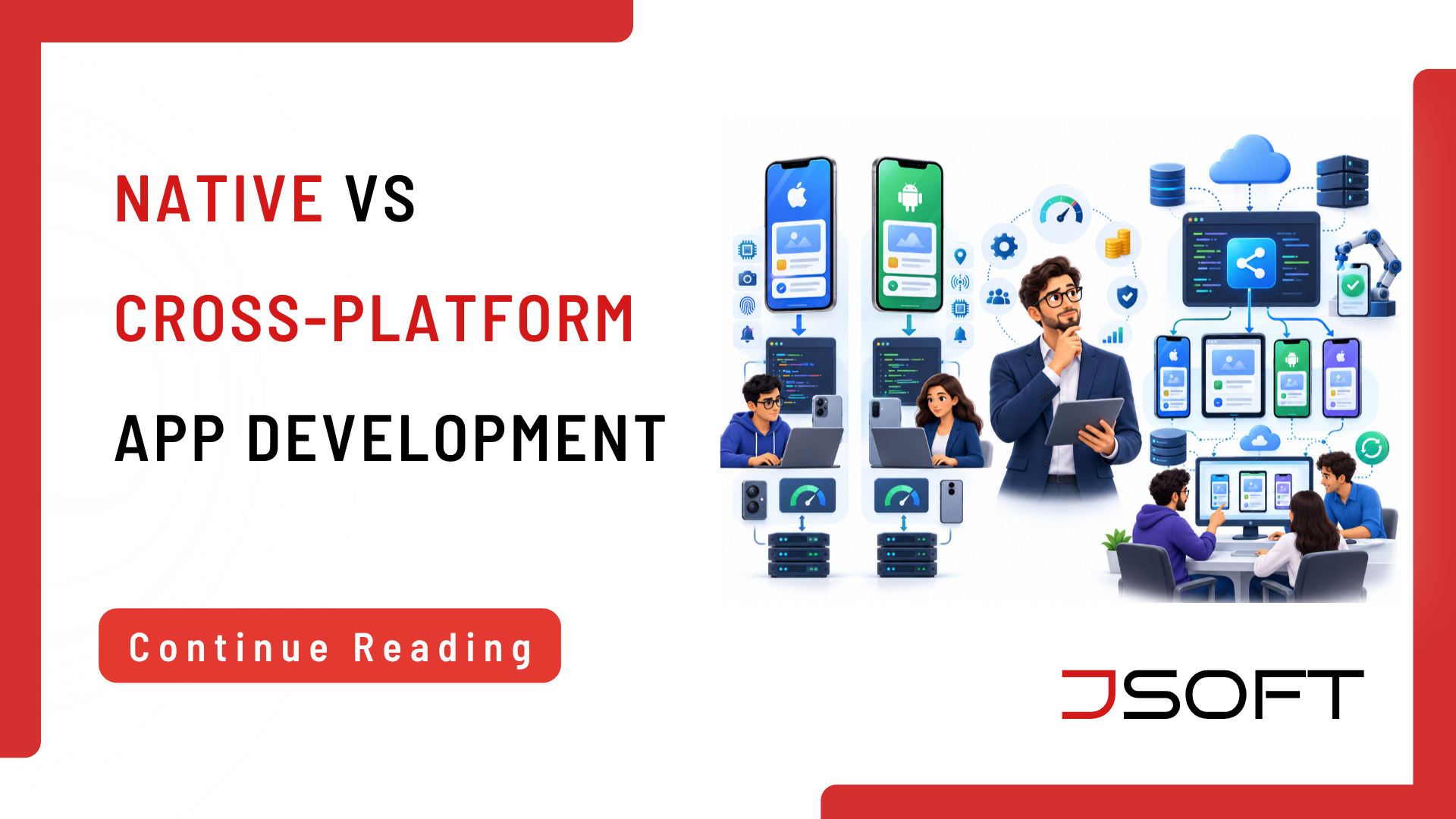
Q: Should I build a native app or a cross-platform app?
A: Native apps (built individually for iOS and Android) offer the best performance and specific features for each platform. Cross-platform frameworks like Flutter or React Native allow one codebase to run on both platforms, cutting down development time and cost. For most small and medium businesses in Sri Lanka, cross-platform is usually practical and economical, unless your app needs advanced platform-specific features.
Q: Will I own the app and the source code after the project?
A: You should, and with JSOFT, you will. Full ownership of the source code transfers to the client after final payment. This means you can take the code to any future developer, host it whenever you want, and change it freely. Always confirm this in the contract before signing with any developer.

Ready to Build Your Mobile App?

Choosing a mobile app developer is one of the most important technology decisions for your business. The right developer becomes a long-term partner in your digital growth. The wrong one can cost you time, money, and momentum. Ask these questions, review the answers carefully, and take your time making the decision.

At JSOFT, we create high-performance mobile apps for iOS and Android tailored to Sri Lankan businesses. Our process is transparent, you have full code ownership, and we offer local support that doesn’t end at launch. Read also: Why Digitalizing Your Small Business Is a Game-Changer.

JSOFT builds high-performance iOS and Android apps for Sri Lankan businesses, transparent process, full code ownership, and local support.

Visit: jsoft.lk/services

JPOS-LankaQR
April 27, 2026

On April 6, 2026, President Anura Kumara Dissanayake officially launched the National QR Payment Promotion Programme at the Presidential Secretariat – marking a significant milestone in Sri Lanka’s journey toward a cashless economy.

The headline change: zero merchant fees on all LankaQR transactions up to Rs. 5,000, effective immediately. For small businesses – restaurants, salons, car washes, distributors, and cloud kitchens – this is one of the most significant payments policy changes in years. But what does it actually mean in practice? This article explains everything you need to know about the programme, what has changed, and what steps your business should take next.

What Is the National QR Payment Promotion Programme?

The National QR Payment Promotion Programme is a government-led initiative implemented under the Central Bank of Sri Lanka (CBSL), Ministry of Digital Economy, GovTech institution, and LankaPay – with support from all major financial institutions. The programme is built on four key pillars:

  • Removing barriers to transactions – including eliminating merchant fees on payments up to Rs. 5,000
  • Encouraging public adoption through incentives, prize draws, and consumer benefits
  • Introducing new technologies, including person-to-person (P2P) QR transfers
  • Conducting nationwide awareness campaigns in Sinhala, Tamil, and English

Central Bank Governor highlighted two critical changes at the launch: free transactions under Rs. 5,000, and the introduction of person-to-person (P2P) QR transfers – allowing customers to send money directly between individuals without visiting a merchant. As the Governor noted, this is the same feature that drove mass adoption in India through UPI.

450,000
Merchant locations accepting LankaQR
20+
Financial institutions supporting LankaQR
Rs. 0
Merchant fee on transactions up to Rs. 5,000
89%
Adult Sri Lankans with bank access

What Has Actually Changed – The Key Facts

1. Zero Merchant Fees on Transactions Up to Rs. 5,000

Previously, merchants were charged a Merchant Discount Rate (MDR) of up to 1% on every LankaQR transaction. This discouraged small vendors from accepting QR payments. From April 6, 2026, this fee has been completely removed for all transactions up to Rs. 5,000. The Sri Lanka Banks’ Association and LankaPay have agreed to absorb the cost – meaning the saving goes directly to you, the merchant.

For a restaurant or salon processing 50 transactions of Rs. 2,000 each per day, this previously cost up to Rs. 1,000 per day in merchant fees. Now it costs nothing. That is over Rs. 30,000 saved per month for a business with average-volume digital payments.

2. Person-to-Person (P2P) QR Transfers Now Supported

In a major expansion, customers can now send money directly between individuals using QR codes – not just at merchant terminals. This is the same model that transformed digital payments in India through UPI, which now accounts for over 81% of retail digital payments in India. For businesses, P2P support means customers have more reason to have their banking apps active and ready – making QR checkout more natural for everyone.

3. A Special Prize Draw for Merchants and Consumers

To accelerate adoption, the government has introduced a prize draw programme for both consumers and merchants. Weekly and monthly draws offer prizes worth up to Rs. 1,000,000. This gives your customers an extra incentive to choose QR payment over cash – which benefits your transaction records, digital paper trail, and business analytics.

4. A Social Visibility Index Across All 25 Districts

A Social Visibility Index has been introduced to track QR payment adoption across all 25 districts, ensuring transparency and fairness in the programme rollout. This signals a long-term policy commitment from the government – not a short-term campaign.

Why Was This Programme Needed? The Background

Sri Lanka already has a strong digital payments infrastructure. 89% of adults have bank access, LankaQR is accepted at 450,000 merchant locations, and the CEFTS system processes 68 million transactions per quarter worth Rs. 6.3 trillion. The problem was never infrastructure – it was cost and habit.

Despite all this, currency in circulation still stands at Rs. 1.48 trillion, while LankaQR transactions were averaging only around Rs. 395 million per month as of the third quarter of 2025. The gap between available infrastructure and actual adoption is what this programme is designed to close.

President Dissanayake addressed this directly at the launch, noting that Sri Lanka has a strong culture of transactions but has not been able to transition from paper-based systems to modern digital platforms. The two key barriers identified were merchant fees and the absence of person-to-person transfers – both of which this programme directly addresses.

What the LankaQR Programme Means for Your Business Type

The impact of fee-free QR payments is not the same for every business. Here is what it means sector by sector:

Restaurants and Cafes
Customers can pay directly from their banking app by scanning a QR code at the counter – no card machine, no cash handling, no queues at the till. With the prize draw incentive running nationally, customers are actively being encouraged to pay by QR. For restaurants, this means faster table turnovers, cleaner end-of-day reconciliation, and a fully digital transaction record for every sale.
Salons and Spas
Service businesses that traditionally rely on cash at the point of checkout have the most to gain from zero-fee QR payments. Customers who are already comfortable with banking apps can simply scan and pay – reducing the need to handle cash, make change, or chase payment after a service. The digital transaction record also makes it easier to track revenue by appointment or stylist.
Car Wash Services
Customers dropping off vehicles can settle payment by QR scan before they leave – simple, instant, and traceable. For car wash businesses managing multiple vehicles at once, QR payments reduce the risk of unpaid or forgotten bills and give a clear digital record of every transaction during the day.
Distributors
For distribution businesses, collecting payments on delivery has always involved cash handling on the road – which carries risk and requires reconciliation at the end of each run. With LankaQR, delivery personnel can receive instant QR payments on the spot, generating an immediate digital confirmation. This makes cash-on-delivery operations safer, faster, and more transparent for both parties.
Cloud Kitchens and Online Food Delivery
The new P2P QR transfer capability is particularly relevant here. Customers can now pay for orders directly from their phone – whether ahead of time or at the point of delivery – without the vendor needing a merchant terminal. For cloud kitchens managing high order volumes, digital payment confirmation at the point of dispatch simplifies reconciliation significantly.

How to Get Started with LankaQR for Your Business

Activating LankaQR for your business is straightforward and does not require any special equipment. Here is the step-by-step process:

  • Contact your bank or financial institution: Ask them to onboard you as a LankaQR merchant. Over 20 financial institutions support LankaQR, including all major banks. There is no setup fee.
  • Receive your LankaQR code: Your bank will issue a LankaQR QR sticker or a digital QR code for your business. You can display the sticker at your counter, on the wall, or show the digital code on any screen or device.
  • Start accepting payments: Customers scan your QR code using any banking app that supports LankaQR. Payment confirmation is instant – no card machine or POS hardware required.
  • Register for the prize draw: Contact your financial institution or visit lankapay.net to register your business for the merchant prize draw programme.
  • Tell your customers: Let customers know you now accept LankaQR payments for free. With the national prize draw running, customers are being motivated to pay by QR – this is a simple way to encourage them at your counter.

For more information on the programme, visit the LankaPay official website or contact your bank directly.

Frequently Asked Questions

Q: Is LankaQR really free for merchants now?
A: Yes – from April 6, 2026, the Merchant Discount Rate has been completely removed for all LankaQR transactions up to Rs. 5,000. This is confirmed by the Central Bank of Sri Lanka and applies to all participating financial institutions immediately.
Q: What is the maximum transaction amount that qualifies for zero fees?
A: Transactions up to Rs. 5,000 are now completely free for merchants. Transactions above this amount may still carry a fee – check with your financial institution for the applicable rate.
Q: Do I need special hardware or a smartphone to accept LankaQR payments?
A: No special hardware is required. Your bank will provide a LankaQR QR sticker that can be displayed at your counter. Customers scan it using their banking app on their smartphone. For the merchant, there is nothing to install or operate – payment confirmation is received via SMS. More details are available at lankapay.net
Q: What is the LankaQR prize draw and how can my business participate?
A: The government has introduced a weekly and monthly prize draw for both consumers and merchants, with prizes up to Rs. 1,000,000. Participation details are managed through your financial institution and LankaPay. Visit lankapay.net for the latest information on the prize draw programme.
Q: What is P2P QR transfer and how does it affect my business?
A: Person-to-person (P2P) QR transfer allows customers to send money directly between individuals using QR codes – not just at merchant points. For your business, this means more customers will have their banking apps active and ready for QR payments, making the checkout experience faster and more familiar.
Q: Which banks support LankaQR?
A: Over 20 financial institutions support LankaQR, including all major commercial banks in Sri Lanka. Contact your bank directly to get your merchant QR code and confirm the current terms. Full details are available on the LankaPay website.
Q: Is this programme only for large businesses or does it apply to small vendors too?
A: The programme is specifically designed for small-scale merchants and micro-vendors. The removal of the MDR for transactions up to Rs. 5,000 – the most common transaction range for small businesses – is intended to remove the single biggest barrier that kept small vendors from adopting QR payments.

Conclusion: A Real Opportunity for Sri Lankan Small Businesses

The National QR Payment Promotion Programme is not just a government announcement. It is a genuine, immediate change to the economics of digital payments for small businesses in Sri Lanka.

For the first time, accepting QR payments costs your business nothing on transactions up to Rs. 5,000. The infrastructure is already in place. Your bank will provide your QR code. Your customers are being incentivised nationally to start using it. The remaining step is yours to take.

Whether you run a restaurant, salon, car wash, distribution business, or cloud kitchen – the barriers to going digital have just been dramatically lowered. Sri Lanka’s National Digital Economy Strategy 2030 sets a clear direction: digital payments are not a future aspiration – they are today’s business reality.

For further reading on how digitalization can benefit your business, see: What Is the ROI of Digitalization for Sri Lankan SMEs? and Why Digitalizing Your Small Business Is a Game-Changer.

JSOFT-POS-system-cashier-using-a-point-of-sale-terminal-to-serve-a-customer-with-a-mobile-phone-in-a-Sri-Lankan-small-business
April 7, 2026

Managing a small business in Sri Lanka has always taken grit, creativity, and long hours. But in 2026, the businesses growing fastest have one thing in common: they have replaced manual notebooks, loose receipts, and guesswork with a modern Point of Sale (POS) system. Whether you run a restaurant in Colombo, a salon in Kandy, a car wash in Galle, a cloud kitchen, or a distribution business anywhere in Sri Lanka this guide will show you exactly why a POS system is no longer a luxury, but a necessity. According to the World Bank SME Finance report, businesses that embrace digital tools show stronger resilience and faster growth compared to non-digitalized SMEs.

What Is a POS System and How Does It Work?

A Point of Sale (POS) system is software and sometimes hardware that processes customer transactions at the moment of purchase. But today’s POS systems do far more than print a receipt. Read more about why SaaS POS solutions are a game-changer for modern businesses.

A modern POS system like JPOS by JSOFT can:

  • Record every sale instantly, with itemized details
  • Track your inventory in real time, so you always know what is in stock
  • Generate daily, weekly, and monthly sales reports
  • Support multiple payment methods including cash, card, and cheque/voucher payments
  • Operate on a tablet or mobile device, no expensive hardware needed
  • Send digital bills via Text messages

Put simply: a POS system turns your billing counter into a business intelligence hub.

5 Reasons Your Sri Lankan Business Needs a POS System in 2026

1. Manual Billing Is Costing You Money

Handwritten bills are slow, error-prone, and leave no reliable data trail. A single miscalculation or lost receipt can mean lost income and disputes with customers. A POS system eliminates human error and ensures every transaction is recorded accurately and automatically.

2. You Cannot Manage What You Cannot Measure

Do you know which product sells the most on Fridays? Which items have been sitting on your shelf for 60 days? Without a POS system, these questions are nearly impossible to answer. With JPOS, you get real-time inventory tracking and sales analytics. See also: What Is the ROI of Digitalization for Sri Lankan SMEs?.

3. Customers Expect a Professional Experience

Consumers in Sri Lanka are more digitally aware than ever. A business that can send an e-bill, offer multiple payment options, and process a sale in seconds builds trust and keeps customers coming back. A POS system helps you deliver that professional experience consistently.

4. Tax Compliance and Reporting Are Getting Stricter

With increasing regulatory requirements for small businesses in Sri Lanka, the Department of Census and Statistics Sri Lanka confirms the SME sector’s significant contribution to national GDP, bringing with it greater financial scrutiny. A POS system automatically keeps a log of all transactions, making tax time and audits far less stressful.

5. Your Competitors Are Already Using One

The businesses winning market share in 2026 are the ones running smarter not just harder. According to a Deloitte study on digital transformation, digitally advanced SMEs grow revenue and productivity at twice the rate of laggards. A POS system levels the playing field and can even give you the edge.

Which Types of Businesses in Sri Lanka Benefit Most from a POS System?

A POS system is not just for supermarkets. Read our full guide on how JSOFT empowers small businesses with affordable SaaS solutions to understand the full scope of what’s possible.

Business TypeKey BenefitJPOS Feature
Restaurants & CafesTable management & order accuracyMulti-transaction & dine-in/Take-away support
Car WashVehicle service tracking & prepayment handlingMileage, service date & custom quotations
SalonsMulti-stylist assignment & service billingE-billing via SMS
Online Food DeliveriesOrder handling, dispatch & delivery trackingCloud kitchen & delivery management tools
DistributorsReturns processing & back-office managementIntegrated distributor back-office system

Introducing JPOS – The POS System Built for Sri Lankan Businesses

JPOS is JSOFT’s flagship point of sale solution, designed specifically for small and medium businesses in Sri Lanka. Unlike expensive imported software, JPOS is affordable, locally supported, and built around the real needs of Sri Lankan business owners. Learn how JPOS is revolutionizing POS systems for small businesses in Sri Lanka.

Key Features of JPOS
• Works on any tablet or mobile device – no dedicated hardware required
• Real-time inventory and stock management
• Multi-transaction and split-payment support
• Digital e-billing via SMS
• Daily, weekly, and monthly sales analytics
• Multi-user access with role-based permissions
• Offline mode – works even without internet connection
• Local support team based in Sri Lanka

JPOS is trusted by over 40 businesses across Sri Lanka. Download the app directly from the Google Play Store and get started today.

How to Choose the Right POS System for Your Business in Sri Lanka

Not all POS systems are created equal. JSOFT’s services page gives a full overview of available solutions. Here is what to look for when evaluating any POS solution:

  • Local support: Can you get help quickly if something goes wrong? A locally supported system is essential.
  • Ease of use: Your staff should be able to learn it in hours, not weeks.
  • Affordability: Look for transparent pricing without hidden subscription fees.
  • Inventory management: Essential for any product-based business.
  • Reporting: You need actionable data, not just raw numbers.
  • Works offline: Power cuts and connectivity issues are a reality in Sri Lanka. Your POS must be reliable regardless.

See also: Digitalization in Business: How to Stay Ahead in 2025 – a JSOFT guide on choosing the right digital tools for your business.

Frequently Asked Questions

Q: How much does a POS system cost in Sri Lanka?
A: JPOS by JSOFT is competitively priced the Monthly plan starts at Rs 2,500/month and the Annual plan is Rs 25,000/year. No expensive hardware is required; it runs on any tablet or Android device. Contact JSOFT at 077 630 6303 for a customized quote.
Q: Can a POS system work without the internet in Sri Lanka?
A: Yes, JPOS includes an offline mode, meaning your business can keep running even during power cuts or connectivity disruptions. All data syncs automatically once you are back online.
Q: Is a POS system suitable for a small shop or petti kada?
A: Absolutely. Even a small retail shop or petti kada can benefit from faster billing, inventory tracking, and daily sales reports. See how JSOFT empowers small businesses with no-hardware SaaS solutions.
Q: How long does it take to set up JPOS?
A: Most businesses are up and running with JPOS within a single day. Download the app from the Google Play Store and the JSOFT team will guide you through onboarding.
Q: What if I need help after installation?
A: JSOFT provides dedicated local IT support for all JPOS users. Reach the team via the JSOFT contact page, by phone on 077 630 6303, or by email at info@jsoft.lk.
Q: Can JPOS send digital receipts to customers?
A: Yes. JPOS supports e-billing via WhatsApp, email, and SMS. Read more about how JPOS secures and delivers e-billing with enterprise-grade AWS security.

The Right Time to Upgrade Is Now

In 2026, running a small business in Sri Lanka without a POS system is like navigating without a map. A modern POS system like JPOS gives you the real-time data, the professional edge, and the operational efficiency to compete and grow. Forbes research highlights that technology adoption is now a competitive necessity for small businesses not just an option.

Want to understand the full return on your investment before you commit? Read: Why Digitalizing Your Small Business Is a Game-Changer.

January 24, 2026

Modern clinics face daily operational challenges; crowded waiting areas, unclear communication, repeated verbal calls, and workflow bottlenecks. At JSOFT, we design IoT solutions that remove friction from clinical operations while improving both staff efficiency and patient experience.

Our clinic-focused IoT systems are built using ESP32 micro controllers and are fully controlled via intuitive Android applications, allowing clinics to digitize key touch points without complex infrastructure or high operational costs.

This blog post explores how JSOFT IoT solutions are redefining clinic operations through clarity, automation, and smart design.

JQUE – Smart Doctor Queue Display

Patient queue management is one of the most visible pain points in clinics. Manual calling systems, verbal announcements, and paper-based tokens often lead to confusion, noise, and repeated questions from patients. JQUE replaces these outdated processes with a real-time digital queue management system that works both inside the clinic and online.

Using a dedicated Android app, clinic staff can:

  • Manage and update queues instantly
  • Call next patients with a single tap
  • Handle multiple doctors or counters
  • Adjust flow dynamically during peak hours

Public Online Queue View

A key strength of JQUE is its public queue view, which is available online. This allows patients to check the live queue status from home or anywhere using their mobile phone. Patients can:

  • View the current queue number remotely
  • Estimate their waiting time before arriving
  • Avoid unnecessary time spent at the clinic
  • Arrive closer to their actual consultation time

This significantly reduces crowding in waiting areas and improves overall patient comfort.

Android App Control – No Extra Hardware Needed

Unlike traditional queue systems that rely on dedicated physical controllers or button panels, JQUE is fully controlled via an Android app.

This means:

  • No separate control devices or panels
  • No complex hardware handling
  • No fixed control point

Clinic staff can manage queues directly from a phone or tablet, making operations faster and more flexible.

Why This Matters for Clinics:

  • Faster queue control with simple taps
  • Staff can operate from anywhere in the clinic
  • Minimal training required
  • Reduced hardware costs
  • Fewer breakdown points
  • Easy scaling for additional doctors or counters

By replacing manual hardware with a smart Android app, JQUE delivers a simpler, more reliable, and future-ready queue system. JQUE transforms queue management into a transparent, patient-friendly experience, extending beyond clinic walls and into patients’ homes.

ESP32-Powered Clinic IoT Architecture

JSOFT clinic solutions are built on ESP32 IoT hardware, chosen for its reliability, connectivity, and scalability.

Technical Advantages:

  • Stable WiFi connectivity
  • Low power consumption
  • Fast response times
  • Secure device communication
  • Long-term operational reliability

This architecture enables clinics to deploy enterprise-grade IoT solutions in a cost-effective and scalable manner.

Real Impact in Real Clinics

JSOFT clinic IoT solutions are designed around real operational challenges, not theoretical use cases. By focusing on clarity, simplicity, and usability, our systems:

  • Reduce staff workload
  • Improve patient satisfaction
  • Minimize operational errors
  • Enhance clinic reputation
  • Prepare clinics for future digital expansion

The JSOFT Clinic IoT Vision

At JSOFT, we believe healthcare technology should be invisible, reliable, and human-centered. Our clinic IoT solutions quietly support doctors, staff, and patients, allowing healthcare professionals to focus on what matters most: care delivery.

Contact JSOFT to modernize your clinic with smart IoT solutions 077 630 6303

Smart Technology for Smarter Clinics

JSOFT-diversity-equity-inclusion
November 24, 2025

Why DEI Matters in Modern Tech Companies

At JSOFT, we believe innovation thrives when different perspectives come together. Our commitment to diversity, equity, and inclusion (DEI) goes beyond policies, it’s embedded in how we think, create, and collaborate every day.

In an industry that moves fast and spans cultures, our people are our greatest strength. Diversity fuels our creativity; equity ensures fairness, and inclusion empowers every voice to be heard.

📘 Read more about JSOFT DEI

Our DEI Philosophy – Diversity Is Our Strength

At JSOFT, diversity means more than representation. It means creating a space where everyone, regardless of gender, background, or belief, can thrive and contribute meaningfully.

We’re proud to have team members from varied academic paths, regions, and experiences working together to solve real-world problems. Whether it’s a young graduate entering their first tech role or a senior engineer mentoring others, we celebrate the unique experiences each person brings.

Our DEI foundation is built on:

  • Equal opportunity recruitment practices
  • Transparent and fair evaluation processes
  • Collaborative, cross-functional team engagement

Initiatives That Empower Underrepresented Groups

Inclusive Hiring Practices

We ensure that every applicant is evaluated purely on merit and skill. Our HR team undergoes bias-awareness training to maintain fairness at every stage of recruitment.

Women in Tech @ JSOFT

We’re proud to see women taking the lead in software engineering, project management, and design roles. Through mentorship programs and skill development sessions, JSOFT continuously supports women in building long-term careers in tech.

“JSOFT gave me the opportunity to grow not just as a developer, but as a leader. The encouragement and trust I’ve received from my team inspire me to pay it forward.” – A JSOFT Team Member, Software Engineer

Student and Intern Mentorship Programs

We collaborate with local universities and technical institutes to mentor students from diverse backgrounds. These programs help bridge the gap between academic learning and real-world software development. 

How We Foster Inclusion Every Day

Inclusion at JSOFT isn’t an occasional initiative. It’s daily practice. 

Here’s how we keep our culture inclusive: 

  • Open communication channels: Everyone is encouraged to share ideas, feedback, and suggestions.
  • Cross-team collaboration: Developers, marketers, and designers work together to build smarter solutions.
  • Cultural celebrations: We recognize cultural and religious events across all communities to promote respect and understanding.
  • Flexible work environment: Our remote work culture allows employees to balance their professional and personal lives effectively.

What DEI Means for Innovation at JSOFT

When teams reflect the diversity of the world they’re building for, the solutions become smarter, fairer, and more human.

At JSOFT, diversity isn’t just a moral commitment, it’s a strategic advantage. By fostering inclusion and equity, we strengthen our ability to innovate and deliver software that resonates across industries and audiences.

🌍 According to McKinsey & Company’s research on diversity and performance, companies with diverse teams outperform less diverse peers by up to 36% and we’re proud to see this reflected in our projects and results.

Building the Future Together

Our journey toward diversity, equity, and inclusion is ongoing. Each initiative, conversation, and team effort brings us closer to a workplace where everyone feels valued, respected, and empowered.

At JSOFT, we’re not just building software – we’re building a community of innovators who believe in the power of people and ideas.

🔗 Learn more about our values and mission

📩 Interested in joining our inclusive team? Apply today

Follow Us on LinkedIn

Stay connected with our latest updates, team stories, and innovation news:

👉 Follow JSOFT on LinkedIn

Together-we-create-collaborate-and-grow-at-JSoft
October 28, 2025

Why Company Culture Matters in a Fast-Paced Tech World

At JSOFT, innovation isn’t just a buzzword. It’s a mindset that begins with our people. Every idea, no matter how small, is valued. Our culture of collaboration and openness empowers every team member to share, create, and grow together. 

In today’s fast-paced tech industry, where trends evolve overnight, company culture becomes the foundation that holds innovation together. A team that communicates freely, learns continuously, and celebrates collective achievements is one that consistently delivers exceptional results. 

Explore our company insights to see how JSOFT continues to evolve with technology and teamwork. 

The JSOFT Mindset: Teamwork, Transparency, and Trust

At the heart of JSOFT lies a belief people build products, not processes. We prioritize open communication, mutual trust, and shared accountability across all teams. 

Our approach is simple but powerful: 

  • Teamwork – Every project is a shared mission, not a solo effort. 
  • Transparency – Clear goals, honest feedback, and open communication channels keep everyone aligned. 
  • Trust – Every team member is empowered to take ownership and make impactful decisions. 

This mindset ensures that innovation doesn’t just happen occasionally. It happens every day. 

How Collaboration Drives Better Software and Happier Clients

Innovation thrives when collaboration meets purpose. At JSOFT, our teams work across disciplines; developers, designers, testers, and project managers all bringing unique strengths to the table. 

Here’s how collaboration impacts our outcomes: 

  1. Faster problem-solving: Ideas flow freely, and challenges are tackled collectively. 
  2. Higher software quality: Peer reviews and open testing sessions ensure consistency and reliability. 
  3. Stronger client relationships: Open communication leads to solutions that exceed expectations. 

      When collaboration is built into company DNA, success becomes a shared experience both internally and with our clients. 

      Learn more about how JSOFT helps businesses innovate through digital transformation: Explore JSOFT Solutions 

      How JSOFT’s Culture Fuels Innovation and Future Growth

      The success of JSOFT’s products and services stems from our people-first culture. When creativity and collaboration intersect, innovation becomes natural. 

      As we look toward the future, JSOFT remains committed to: 

      • Expanding global partnerships built on trust and collaboration 
      • Empowering teams with the latest tools and learning opportunities 
      • Continuing to foster an inclusive environment where great ideas thrive 

      Stay connected and see how JSOFT’s innovation culture is shaping the digital future: Follow JSOFT on LinkedIn 

      Conclusion 

      A culture that empowers people to think, create, and collaborate is what makes JSOFT more than just a tech company, it makes us a community of innovators. 

      Because at JSOFT, we don’t just build software – we build together

      ROI of Digitalization for Sri Lankan SMEs
      October 8, 2025

      For Sri Lankan SMEs, digitalization is no longer optional, it’s a necessity for growth. But many business owners ask: What’s the return on investment (ROI) of digitalization? 

      By focusing on payback period, cost savings, and revenue uplift, SMEs can better evaluate whether technology investments will deliver sustainable results. 

      Understanding ROI in Digitalization

      ROI (Return on Investment) in digitalization measures the financial benefits compared to the costs of adopting new technology. 

      ROI=[(Benefits – Costs)/Cost)] ×100

      Key benefits for SMEs include: 

      • Faster operations and billing 
      • Reduced errors and wastage
      • Improved customer experience
      • Increased access to online markets

      According to World Bank SME Reports, businesses that embrace digital tools show stronger resilience and growth compared to non-digitalized SMEs.

      Key ROI Metrics for Sri Lankan SMEs

      Cost Savings 

      Digitalization reduces: 

      • Manual processing errors 
      • Overtime and staffing inefficiencies 
      • Printing, paper, and storage costs
      • Inventory losses and theft 

      Sri Lankan SMEs typically save 10–20% of operational costs annually through digital adoption.

      Revenue Uplift 

      Digital tools don’t just save money, they grow revenue: 

      • Faster service = more customers served 
      • Digital loyalty systems = higher repeat sales 
      • Online sales = expanded reach beyond local customers 
      • Analytics = optimized pricing and promotions 

      Benchmarks: 

      • Retail: 5–15% sales growth in the first year 
      • Restaurants: 10–20% uplift through faster service & delivery integrations 
      • Service providers: 8–12% increase with improved client handling 

      How to Measure ROI of Digitalization

      • List all costs – hardware, software, training, and maintenance. 
      • Track efficiency gains – staff hours saved, reduced errors, fewer delays. 
      • Measure sales impact – number of transactions, customer retention, online orders. 
      • Review regularly – compare results every 6–12 months.

      Sri Lankan SME Benchmarks 

      Studies and case experiences suggest: 

      • Payback within 1 year for most SMEs adopting POS, ERP, or digital accounting 
      • 12–18% annual cost savings 
      • 8–15% revenue growth in the first 12–18 months

      Conclusion 

      For Sri Lankan SMEs, digitalization delivers tangible, measurable ROI. By tracking payback period, cost savings, and revenue uplift, business owners can confidently evaluate investments and make informed decisions. 

      Bottom line: Digitalization is not an expense; it’s a growth engine. 

      Thinking about digitalizing your business? Explore our insights and tools designed for SMEs: 

      👉 Explore JSOFT Solutions 
      👉 Contact Us for expert guidance 

      Illustration of professionals using digital devices with growth charts and technology icons, representing business digitalization in 2025
      September 17, 2025

      Digitalization is no longer a future trend; it is the present reality shaping every industry. From small retailers to global enterprises, businesses are leveraging digital tools to optimize processes, improve customer experiences, and gain a competitive edge. At JSOFT, we help businesses embrace digital transformation with solutions designed for speed, efficiency, and scalability.

      What is Digitalization?

      Digitalization is the process of using digital technologies to transform business models, streamline operations, and create new value for customers. Unlike simple digitization (converting physical files to digital format), digitalization is about integrating technology into core business processes.

      Key Benefits of Digitalization

      • Faster Operations – Automating manual tasks reduces errors and improves productivity.
      • Data-Driven Insights – Real-time analytics help businesses make informed decisions.
      • Better Customer Experience – Digital tools improve communication, personalization, and service delivery.
      • Scalability – Cloud-based platforms allow businesses to grow without heavy infrastructure costs.
      • Cost Efficiency – Reducing paperwork, manual errors, and delays saves significant resources.

      Digitalization Strategies for Businesses in 2025

      • Adopt Cloud Solutions – Ensure flexibility and secure access to your systems anywhere.
      • Leverage AI & Automation – Use intelligent tools to streamline repetitive processes.
      • Strengthen Cybersecurity – Protect customer data with robust digital security measures.
      • Invest in POS & ERP Systems – Platforms like JPOS provide fast billing, inventory management, and real-time reports.
      • Train Your Workforce – Empower teams with digital skills to maximize technology adoption.

      Real-World Example: JPOS Digital Transformation

      For restaurants and retail businesses, billing delays and inventory errors are common challenges. With JPOS by JSOFT, businesses benefit from:

      • Instant, error-free billing
      • Centralized inventory control
      • Real-time sales tracking
      • Growth-focused reporting tools

      This kind of digitalization in POS systems helps businesses improve efficiency and enhance customer satisfaction.

      Conclusion

      Digitalization is not optional, it’s essential for long-term success. Businesses that embrace technology will achieve efficiency, growth, and customer loyalty, while those that delay risk falling behind competitors.

      At JSOFT, we empower businesses with innovative solutions like JPOS that make digital transformation simple and effective.

      🚀 Ready to digitalize your business? Contact JSOFT today and discover how our solutions can transform your operations. 

      May 30, 2025

      In today’s fast-moving digital economy, small businesses often struggle to keep up with technology. High upfront costs, technical know-how, and the need for ongoing support can feel overwhelming, especially for business owners focused on serving their customers and growing their brand.At JSOFT, we believe that technology shouldn’t be a barrier. It should be an enabler.That’s why we’ve made it our mission to deliver high-quality, affordable SaaS products tailored specifically for small businesses without the need for heavy capital investments or complex IT setups.

      💡 No Capital? No Problem

      Many traditional software systems require expensive licenses, dedicated hardware, and upfront infrastructure costs. At JSOFT, we’ve eliminated those barriers. Our cloud-based solutions run on any device even a tablet with no need for expensive hardware or installations. You pay only for what you use, making it perfect for startups and small businesses with tight budgets.

      🚀 Technology Without the Headache

      JSOFT’s products are ready to use out of the box. Whether you’re running a salon, grocery, restaurant, or retail shop, we offer intuitive tools built for your industry. There’s no need to hire a developer, manage servers, or worry about data backups. We’ve taken care of the tech, so you can focus on your business.

      🛠️ Full Support, Always

      Our support team is just a message away. From on-boarding to day-to-day operations, JSOFT ensures you have the help you need, when you need it. You don’t need an IT department, we are your IT department.

      🌐 Built to Scale with You

      Starting small? No problem. Growing fast? Even better. Our SaaS solutions scale effortlessly as your business grows. Add new users, locations, or features without redoing your entire setup.

      🧠 Smart Tools, Built for the Real World

      From real-time analytics and multi-transaction capabilities to e-billing and mobile access, our solutions are packed with features that help small businesses compete and thrive in today’s digital world.

      Join Hundreds of Small Businesses Already Thriving with JSOFT

      We’re proud to support local entrepreneurs and community businesses across Sri Lanka and beyond. At JSOFT, we don’t just build software we build solutions that empower dreams.

      Ready to simplify your business operations?

      Start with JSOFT – Smart. Affordable. Powerful.

      Blog Categories