
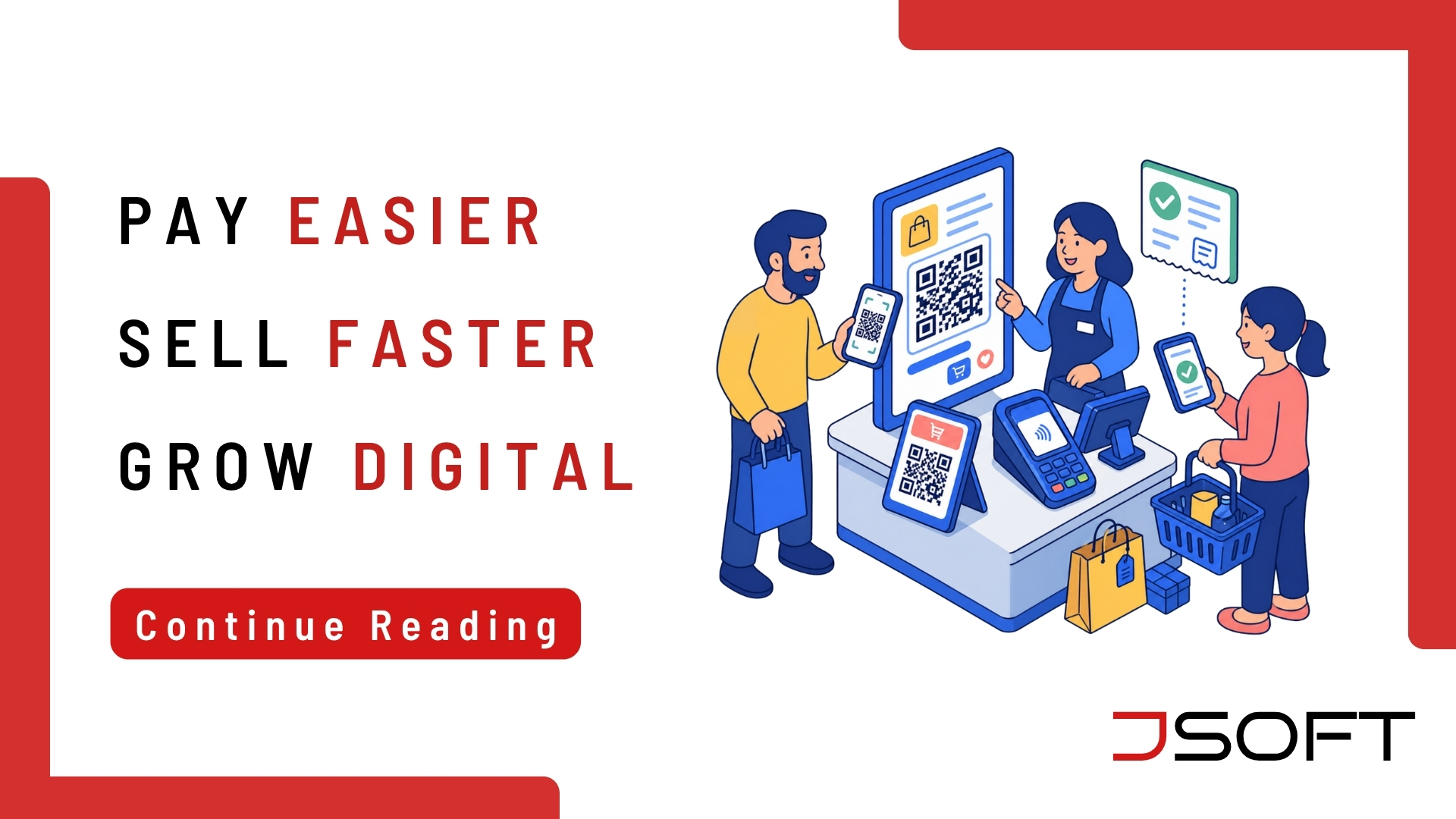
On April 6, 2026, President Anura Kumara Dissanayake officially launched the National QR Payment Promotion Programme at the Presidential Secretariat – marking a significant milestone in Sri Lanka’s journey toward a cashless economy.
The headline change: zero merchant fees on all LankaQR transactions up to Rs. 5,000, effective immediately. For small businesses – restaurants, salons, car washes, distributors, and cloud kitchens – this is one of the most significant payments policy changes in years. But what does it actually mean in practice? This article explains everything you need to know about the programme, what has changed, and what steps your business should take next.
What Is the National QR Payment Promotion Programme?
The National QR Payment Promotion Programme is a government-led initiative implemented under the Central Bank of Sri Lanka (CBSL), Ministry of Digital Economy, GovTech institution, and LankaPay – with support from all major financial institutions. The programme is built on four key pillars:
- Removing barriers to transactions – including eliminating merchant fees on payments up to Rs. 5,000
- Encouraging public adoption through incentives, prize draws, and consumer benefits
- Introducing new technologies, including person-to-person (P2P) QR transfers
- Conducting nationwide awareness campaigns in Sinhala, Tamil, and English
Central Bank Governor highlighted two critical changes at the launch: free transactions under Rs. 5,000, and the introduction of person-to-person (P2P) QR transfers – allowing customers to send money directly between individuals without visiting a merchant. As the Governor noted, this is the same feature that drove mass adoption in India through UPI.
| 450,000 Merchant locations accepting LankaQR | 20+ Financial institutions supporting LankaQR | Rs. 0 Merchant fee on transactions up to Rs. 5,000 | 89% Adult Sri Lankans with bank access |
What Has Actually Changed – The Key Facts
1. Zero Merchant Fees on Transactions Up to Rs. 5,000
Previously, merchants were charged a Merchant Discount Rate (MDR) of up to 1% on every LankaQR transaction. This discouraged small vendors from accepting QR payments. From April 6, 2026, this fee has been completely removed for all transactions up to Rs. 5,000. The Sri Lanka Banks’ Association and LankaPay have agreed to absorb the cost – meaning the saving goes directly to you, the merchant.
For a restaurant or salon processing 50 transactions of Rs. 2,000 each per day, this previously cost up to Rs. 1,000 per day in merchant fees. Now it costs nothing. That is over Rs. 30,000 saved per month for a business with average-volume digital payments.
2. Person-to-Person (P2P) QR Transfers Now Supported
In a major expansion, customers can now send money directly between individuals using QR codes – not just at merchant terminals. This is the same model that transformed digital payments in India through UPI, which now accounts for over 81% of retail digital payments in India. For businesses, P2P support means customers have more reason to have their banking apps active and ready – making QR checkout more natural for everyone.
3. A Special Prize Draw for Merchants and Consumers
To accelerate adoption, the government has introduced a prize draw programme for both consumers and merchants. Weekly and monthly draws offer prizes worth up to Rs. 1,000,000. This gives your customers an extra incentive to choose QR payment over cash – which benefits your transaction records, digital paper trail, and business analytics.
4. A Social Visibility Index Across All 25 Districts
A Social Visibility Index has been introduced to track QR payment adoption across all 25 districts, ensuring transparency and fairness in the programme rollout. This signals a long-term policy commitment from the government – not a short-term campaign.
Why Was This Programme Needed? The Background
Sri Lanka already has a strong digital payments infrastructure. 89% of adults have bank access, LankaQR is accepted at 450,000 merchant locations, and the CEFTS system processes 68 million transactions per quarter worth Rs. 6.3 trillion. The problem was never infrastructure – it was cost and habit.
Despite all this, currency in circulation still stands at Rs. 1.48 trillion, while LankaQR transactions were averaging only around Rs. 395 million per month as of the third quarter of 2025. The gap between available infrastructure and actual adoption is what this programme is designed to close.
President Dissanayake addressed this directly at the launch, noting that Sri Lanka has a strong culture of transactions but has not been able to transition from paper-based systems to modern digital platforms. The two key barriers identified were merchant fees and the absence of person-to-person transfers – both of which this programme directly addresses.
What the LankaQR Programme Means for Your Business Type
The impact of fee-free QR payments is not the same for every business. Here is what it means sector by sector:
| Restaurants and Cafes Customers can pay directly from their banking app by scanning a QR code at the counter – no card machine, no cash handling, no queues at the till. With the prize draw incentive running nationally, customers are actively being encouraged to pay by QR. For restaurants, this means faster table turnovers, cleaner end-of-day reconciliation, and a fully digital transaction record for every sale. |
| Salons and Spas Service businesses that traditionally rely on cash at the point of checkout have the most to gain from zero-fee QR payments. Customers who are already comfortable with banking apps can simply scan and pay – reducing the need to handle cash, make change, or chase payment after a service. The digital transaction record also makes it easier to track revenue by appointment or stylist. |
| Car Wash Services Customers dropping off vehicles can settle payment by QR scan before they leave – simple, instant, and traceable. For car wash businesses managing multiple vehicles at once, QR payments reduce the risk of unpaid or forgotten bills and give a clear digital record of every transaction during the day. |
| Distributors For distribution businesses, collecting payments on delivery has always involved cash handling on the road – which carries risk and requires reconciliation at the end of each run. With LankaQR, delivery personnel can receive instant QR payments on the spot, generating an immediate digital confirmation. This makes cash-on-delivery operations safer, faster, and more transparent for both parties. |
| Cloud Kitchens and Online Food Delivery The new P2P QR transfer capability is particularly relevant here. Customers can now pay for orders directly from their phone – whether ahead of time or at the point of delivery – without the vendor needing a merchant terminal. For cloud kitchens managing high order volumes, digital payment confirmation at the point of dispatch simplifies reconciliation significantly. |
How to Get Started with LankaQR for Your Business
Activating LankaQR for your business is straightforward and does not require any special equipment. Here is the step-by-step process:
- Contact your bank or financial institution: Ask them to onboard you as a LankaQR merchant. Over 20 financial institutions support LankaQR, including all major banks. There is no setup fee.
- Receive your LankaQR code: Your bank will issue a LankaQR QR sticker or a digital QR code for your business. You can display the sticker at your counter, on the wall, or show the digital code on any screen or device.
- Start accepting payments: Customers scan your QR code using any banking app that supports LankaQR. Payment confirmation is instant – no card machine or POS hardware required.
- Register for the prize draw: Contact your financial institution or visit lankapay.net to register your business for the merchant prize draw programme.
- Tell your customers: Let customers know you now accept LankaQR payments for free. With the national prize draw running, customers are being motivated to pay by QR – this is a simple way to encourage them at your counter.
For more information on the programme, visit the LankaPay official website or contact your bank directly.
Frequently Asked Questions
| Q: Is LankaQR really free for merchants now? A: Yes – from April 6, 2026, the Merchant Discount Rate has been completely removed for all LankaQR transactions up to Rs. 5,000. This is confirmed by the Central Bank of Sri Lanka and applies to all participating financial institutions immediately. |
| Q: What is the maximum transaction amount that qualifies for zero fees? A: Transactions up to Rs. 5,000 are now completely free for merchants. Transactions above this amount may still carry a fee – check with your financial institution for the applicable rate. |
| Q: Do I need special hardware or a smartphone to accept LankaQR payments? A: No special hardware is required. Your bank will provide a LankaQR QR sticker that can be displayed at your counter. Customers scan it using their banking app on their smartphone. For the merchant, there is nothing to install or operate – payment confirmation is received via SMS. More details are available at lankapay.net |
| Q: What is the LankaQR prize draw and how can my business participate? A: The government has introduced a weekly and monthly prize draw for both consumers and merchants, with prizes up to Rs. 1,000,000. Participation details are managed through your financial institution and LankaPay. Visit lankapay.net for the latest information on the prize draw programme. |
| Q: What is P2P QR transfer and how does it affect my business? A: Person-to-person (P2P) QR transfer allows customers to send money directly between individuals using QR codes – not just at merchant points. For your business, this means more customers will have their banking apps active and ready for QR payments, making the checkout experience faster and more familiar. |
| Q: Which banks support LankaQR? A: Over 20 financial institutions support LankaQR, including all major commercial banks in Sri Lanka. Contact your bank directly to get your merchant QR code and confirm the current terms. Full details are available on the LankaPay website. |
| Q: Is this programme only for large businesses or does it apply to small vendors too? A: The programme is specifically designed for small-scale merchants and micro-vendors. The removal of the MDR for transactions up to Rs. 5,000 – the most common transaction range for small businesses – is intended to remove the single biggest barrier that kept small vendors from adopting QR payments. |
Conclusion: A Real Opportunity for Sri Lankan Small Businesses
The National QR Payment Promotion Programme is not just a government announcement. It is a genuine, immediate change to the economics of digital payments for small businesses in Sri Lanka.
For the first time, accepting QR payments costs your business nothing on transactions up to Rs. 5,000. The infrastructure is already in place. Your bank will provide your QR code. Your customers are being incentivised nationally to start using it. The remaining step is yours to take.
Whether you run a restaurant, salon, car wash, distribution business, or cloud kitchen – the barriers to going digital have just been dramatically lowered. Sri Lanka’s National Digital Economy Strategy 2030 sets a clear direction: digital payments are not a future aspiration – they are today’s business reality.
For further reading on how digitalization can benefit your business, see: What Is the ROI of Digitalization for Sri Lankan SMEs? and Why Digitalizing Your Small Business Is a Game-Changer.